

Why should you Care?
Maybe you know the Union of Atomic Scientists recently set its Doomsday Clock, a metaphorical measure of the risk of human annihilation, to 90 seconds–the highest level since the clock was established in 1947. You could be troubled that spiraling violence in the Middle East, war in Ukraine, a bellicose North Korea, and growing tensions between the U.S. and China raise the specter of a nation (or terrorist group) resorting to nuclear weapons? Were you alarmed that the Nobel Peace Prize Committee was anxious about a weakening ‘taboo’ against use of nuclear weapons when they awarded their 2024 prize to Nihon Hidankyo, an organization of survivors of the atomic bombings of Hiroshima and Nagasaki, “for its efforts to achieve a world free of nuclear weapons.” Did you read the New York Times bestseller Nuclear War–Annie Jacobsen’s meticulously researched exploration of a possible nuclear missile launched at the U.S. by North Korea? She details the shockingly brief window in which leaders of the nuclear superpowers must make crucial choices and what small but plausible mistakes could unleash a nuclear Armageddon?
For years, we shared our beautiful Central Kentucky with a massive trove of weapons prohibited by international law—nerve gas in deteriorating canisters at the Bluegrass Army Depot. A small group of informed citizens led the daunting and expensive movement to safely dispose this lethal threat. Today we are challenged by renewed nuclear threats. We invite you to learn what we can do.
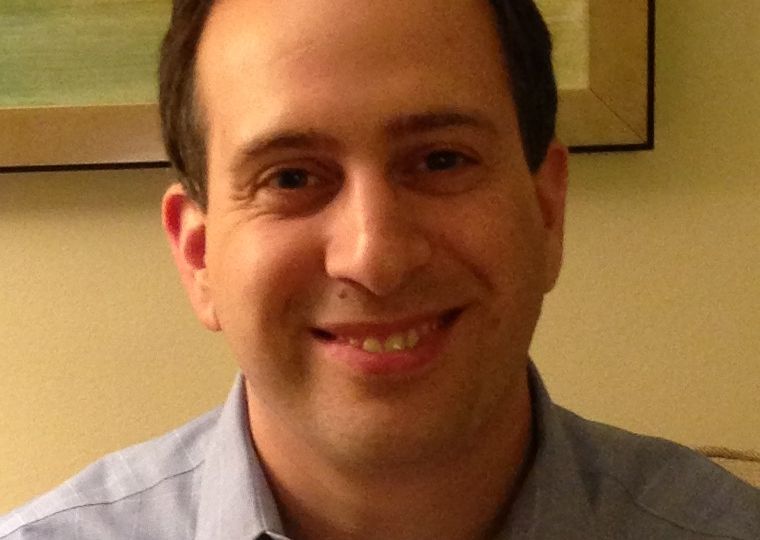
Dr. Kaplow is associate professor of Government at the College of William and Mary. He is the author of Signing Away the Bomb: The Surprising Success of the Nuclear Nonproliferation Regime. 2022. Cambridge, UK: Cambridge University Press. Before coming to William Mary, Professor Kaplow was a Fellow with the University of California’s Institute on Global Conflict and Cooperation and a Stanton Nuclear Security Fellow at the RAND Corporation. In previous work, he analyzed foreign nuclear programs for the U.S. Government. He holds a Ph.D. in political science from the University of California, San Diego and an M.P.P. in international security policy from Harvard’s Kennedy School. Dr. Kaplow’s presentation is co-sponsored by the Peace Studies Program in UK’s College of Arts and Sciences, the Central Kentucky Council for Peace and Justice, and the Catholic Diocese of Lexington.